Articles

Search Article

Thank you! Your submission has been received!
Oops! Something went wrong while submitting the form.

November 18, 2025

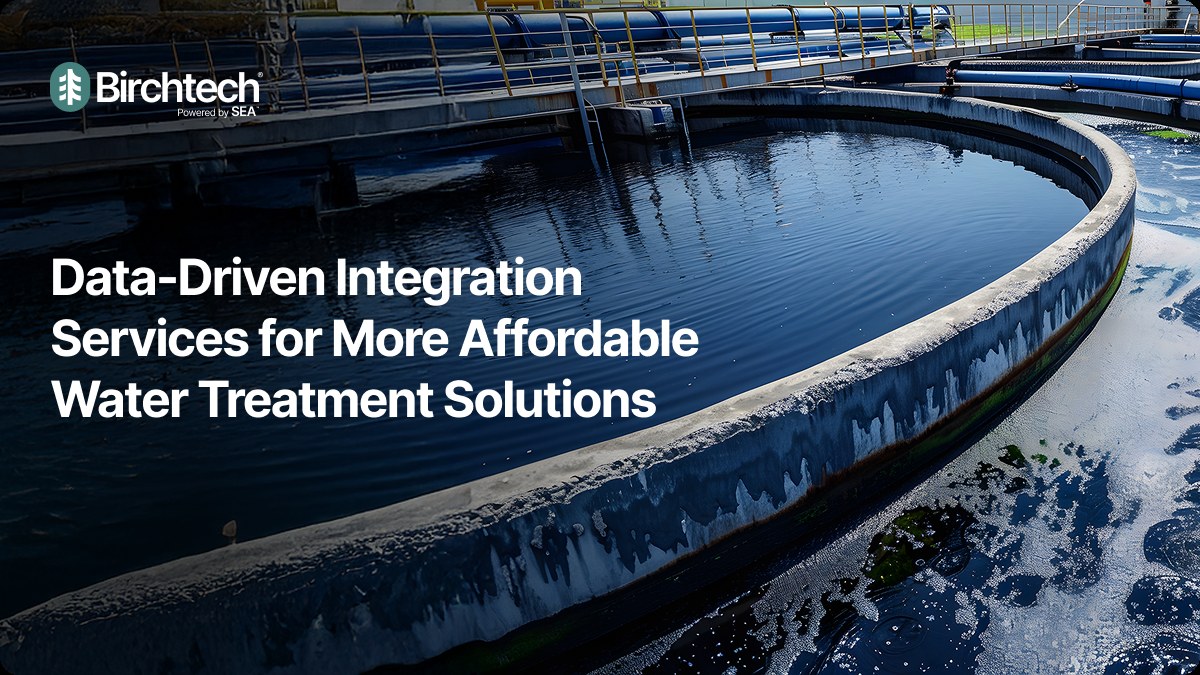
Data-Driven Integration Services for More Affordable Water Treatment Solutions

Through well-known industry expertise and relationships, Birchtech has worked closely with a major coal-fired power utility located

Introduction

Through well-known industry expertise and relationships, Birchtech has worked closely with a major coal-fired power utility located in the Mid-Atlantic region, supporting multiple plant locations to holistically provide differing technology solutions to address varying types of water and removal of multiple critical contaminants from different water streams.

Challenges and Regulatory Context

Challenges at this large utility that affected two plant locations involved multiple water touch points, from its filtration system that cleans water prior to entry into the boiler and hydrogen sulfide (H2S) on the boiler water walls, which can cause significant corrosion leading to boiler failure. Additionally, this utility uses a wet scrubber for mercury emissions removal.  A wet scrubber control device, used by certain coal-fired power plants, municipal waste incinerators, and other applications, collects mercury and other pollutants through an adsorption process by the liquid in the scrubber.  The contaminated scrubber liquid must be properly treated to remove certain pollutants prior to disposal.  Wet scrubbers at coal-fired power plants are heavily contaminated with boron and selenium, a regulated contaminant under the U.S. EPA’s Safe Drinking Water Act (SDWA).  The EPA also governs wastewater with strict pollution controls, prohibiting disposing of toxic heavy metals, such as selenium, into local waterways.  

With stricter environmental regulations, the extensive cost of removing certain heavy contaminants is a significant driver1 of early closures for coal-fired power plants. On March 12, 2025, the EPA announced that it would reconsider certain water pollution limits for coal power plants to allow a longer life for these utilities. However, as power demands on the grid continue to increase, the only true solution to ensuring clean “energy dominance” in the U.S. is more affordable and effective treatment solutions.

Birchtech’s Integrated Solution

With numerous treatment concerns affecting water going into and out of the system’s boiler, the utility’s environmental leadership approved a holistic approach from Birchtech which focused on improved efficiency and affordability.

To initiate the project, the utility’s water was analyzed from four different sources to fully assess the level of contaminants at each source.

The first project at this utility addresses the filtration system that included a thorough inspection and validation of the utility’s equipment to determine an effective solution that would provide upstream protection of the plant’s reverse osmosis for its incoming boiler feed water. Media was assessed and a combination of sand and anthracite was selected based on performance and cost.

Contaminant Treatment: Boron and Selenium

The utility was aware that the wet scrubber control device was contaminated with both boron and selenium. The analysis of the wastewater detected high levels of each contaminant. To remove boron, a naturally occurring element found in U.S. coal that can be toxic to plants, animals, and humans, from the utility’s scrubber wastewater, a combination of anion and cation.

Exchange resins were selected for the effectiveness with this contaminant. Birchtech’s turnkey changeout service includes with the removal of the old media and installation of the new resins. Due to extensive nature of this contaminant and to ensure that the utility’s power generation schedule was not interrupted, the resin change out service will begin early 2026.

Wet scrubber water from coal-fired stacks is often contaminated with selenium, as was the case with this utility. The selenium must be removed prior to disposing of scrubber water into wastewater bed/stream. Resins are the most common approach to remove selenium in this application. These resins are referred to as “bacteria” or “bugs”, as they operate anaerobically to “eat” the selenium. However, optimal conditions, which are difficult to control, are necessary for this solution, which is costly and labor intensive.

From expertise in a variety of utility conditions and contaminant removal technologies, Birchtech coordinated and managed a pilot test, to determine the effectiveness of a proprietary adsorptive media, a novel approach for the removal of the selenium.

Through a data-driven approach coupled with Birchtech’s strong industry knowledge, expertise, and partnerships, it is estimated that this utility received a total cost savings of several hundred thousand dollars (relative to existing technologies) for these combined treatment technologies as Birchtech’s integration services for water treatment solutions are expected to provide utilities with an average cost improvement of 30%2 compared to other solution providers.

Commitment to Sustainability

Birchtech is committed to providing more affordable, sustainable, and highly effective environmental technologies focused on the removal of heavy contaminants from our air and water.

Learn more about Birchtech’s environmental technology integration services for water treatment solutions here:https://www.birchtech.com/water-treatment.

Contact sales@birchtech.com to discuss a custom treatment solution for your utility’s contaminant requirements.

1. Statement made from Birchtech’s industry knowledge. Also see: Friedman, L., & Davenport, C. (2024, April 25). EPA Severely Limits Pollution from Coal-Burning Power Plants. The New York Times. https://www.nytimes.com/2024/04/25/climate/biden-power-plants-pollution.html

2. Average plant cost improvement based on internal calculations and comparisons of current industry product supply pricing.

December 11, 2025

Behind the Breakthroughs: The Support Teams Powering Birchtech’s Design Centers

Our Design Center teams provide comprehensive analytical and pilot-scale testing services that help utilities determine the most appropriate GAC media

At Birchtech, the development and deployment of advanced water-treatment technologies are driven not only by scientific leadership, but by the highly skilled support staff working within our Analytical and Carbon Development Design Centers. These professionals deliver the technical rigor, analytical precision, and operational excellence that enable water utilities to make informed, data-driven decisions about granular activated carbon (GAC) solutions—including the evaluation of reactivated GAC as a cost-effective and sustainable option.

Technical Expertise That Guides Utility Decisions

Our Design Center teams provide comprehensive analytical and pilot-scale testing services that help utilities determine the most appropriate GAC media for their contaminant profile, treatment objectives, and system configuration. Support staff conduct controlled bench-scale adsorption studies, rapid small-scale column tests (RSSCTs), and full-scale media performance modeling to evaluate breakthrough behavior for PFAS, disinfection byproduct precursors, organic contaminants, and other trace compounds.

The Analytical Design Center in Grand Forks, ND, is overseen by analytical specialists that manage sample preparation, instrument calibration, and method execution to ensure defensible datasets. Their work supports comparative evaluations of virgin GAC, chemically enhanced media, and specialty formulations—allowing utilities to quantify adsorption kinetics, operational lifetimes, and replacement intervals under site-specific conditions.

At the Carbon Development Design Center, State College, PA, technical personnel support pilot-system fabrication, field deployment, and performance monitoring. By operating pilot adsorption columns under real-world flow, loading, and backwash conditions, the PA team generates operational data that guide media selection, changeout scheduling, and system design recommendations. This applied testing helps utilities validate model predictions and optimize treatment strategies prior to full-scale implementation.


Birchtech Carbon Development Design Center, State College, PA

Evaluating the Advantages of Reactivated GAC

A key area where Design Center support staff provide insight is in assessing whether reactivated granular activated carbon (rGAC) can meet a utility’s performance, cost, and sustainability requirements. Through controlled comparison testing, staff quantify differences in adsorption capacity, regeneration loss, and treatment-life variability between virgin GAC and reactivated alternatives.

They also coordinate carbon characterization analyses—such as iodine number, BET surface area, pore-size distribution, and ash content—to confirm whether rGAC meets specifications for PFAS treatment, taste-and-odor control, or organics removal. These evaluations allow utilities to understand the lifecycle cost implications and environmental benefits of incorporating reactivation into their carbon-management strategy.

Granular Activated Carbon

Precision and Collaboration at the Core

What distinguishes Birchtech’s Design Centers is the coordinated workflow between bench chemists, field technicians, data specialists, and system operators. Their combined efforts ensure every dataset is validated, every pilot operated according to protocol, and every recommendation grounded in reliable, application-specific evidence. This integrated approach accelerates decision-making and provides utilities with a clear understanding of how GAC and rGAC will perform across varying influent conditions and regulatory requirements.

Dr. Nicholas Lentz at Birchtech Analytical Design Center

Supporting Utilities With Confidence

With a disciplined, technically rigorous support structure across ND and PA, Birchtech’s Design Centers deliver the applied science that utilities rely on to design effective, cost-efficient treatment systems. From initial contaminant characterization to side-by-side media performance analysis, our support staff play a central role in ensuring every water-treatment solution is backed by industry-leading precision, quality, and technical insight.

Birchtech Analytical Design Center, Grand Forks, ND